Friday, 22 February 2013

CLOUD ATLAS


And so it seems that the time of "unfilmable books" turning into films continues. After the huge success of Life Of Pi we now have another piece of monumental movie making mountaineering to climb. This time however it was not the technology holding things back like Lee faced with bringing a Bengal tiger to life in the confined space of a drifting lifeboat, but of the multi-layered and many plot lines of the source novel itself.

The team that brought the now immortal line of "I know kung fu," were not the people that would easily spring to mind to be able to handle such a time-spanning and worldly-hopping experience such as those that unfold during the many centuries of Cloud Atlas but attempt it they did.

And succeed they have.

Along with Tom Tykwer - the man responsible behind the almost equally multi-layered plotting of Run, Lola Run, The Wachowski's and he have both adapted David Mitchell's novel for the screen and then, just to add to their plate, directed it too. This is by no means an easy task. There are 6 different stories that take place all in different time zones, different locations, different dialects and, spoiler alert, different planets entirely.

To do this, the trio have taken the source novel and its framing and, although nodding to whilst keeping true to it, have opted for a more novel but satisfying cinematic approach to the stories and their inter-connectedness. This doesn't mean that they have made it an easier experience for those who do not wish to or who are not used to having their films demand things from them such as attention, retention and suspension. Some may not like the idea of "souls" moving through time and continuing their journey towards their respective goals - continuously "meeting again and again in different lives and different ages,"- but to help the viewer make this connection, the trio have devised a plan.

And a rather cunning one it is at that! The central actors all play different parts in all of the six stories that weave across the silver screen, however, they are not the same characters. Some are not even the same gender. This gives way to a nice little side line during the films just-shy-of three hours running time - spot the Tom Hanks/Halle Berry/Jim Broadbent/Hugo Weaving/Jim Sturgess/Doona Bae/Ben Whishaw in all of the six stories. They are all there, even in the background, so if you feel the time-jumping, soul-swapping stances of the film itself are slipping away from you, you could always play the Where's The Actor until the end credits reveal them to you.

The actors themselves seem to have a great time, revelling in the different types of challenges that their characters face in the seemingly different styles of genre film-making presented - a futuristic The Handmaidens' Tale-esque world which is the closest to The Wachowski's The Matrix where all is not what it seems and revelations of The One who is to open every ones eyes to the truth; a 1970's conspiracy thriller of Watergate proportions; a 1930's tale of forbidden love and doomed souls due to society and its constraints - all these and the others are presented together yet very much apart.

The key to this is the editing of the film itself and of the six plots. A significant reveal or image on one story quickly cuts to another with that point carried over thus helping you to not only make the connection but to keep it and then keep track of it when the next jump takes place, whether it be on a ship in the 1800's or on a hover-bike in the far-flung future. This type of confidence in their work and in the capacity of the viewer to not only to connect but to enjoy is both brave and rewarding for all involved. The only big leap of faith that the trio have taken is with the dialogue - in particular the dialect that bookends the film. The story of a world where the earth is inhabited by the peaceful tribes of Tom Hanks and the cannibalistic tribes of Hugh Grant has its own futuristic language which is at times hard to follow and can create a distance between the viewer and events, but overall the message does break through that barrier and balance is easily restored.

A film that shows that when given the chance, The Wachowski's along with Tykwer can deliver a complex story and not let it get crushed under its own message - part two and three of The Matrix trilogy to be exact. All whilst utilising effects to help rather than hinder the overall experience, Cloud Atlas is a brave piece of movie-making and one that is well worth the time and effort that it asks of you.

UK release date: 22.02.13
Certificate: 15


Thursday, 7 February 2013

HITCHCOCK


So, we all know that buses come along in threes. We also know that the movie industry has a similar trait where rival studios seem to try and bring out the same type of film sometimes only months apart from each other.

Spielberg's latest saw him focus on a (US) national treasure and rather than a full bio-pic, he concentrated the camera on just one chapter in the life of Lincoln. Well, here's your next bus pulling up!

Hitchcock, like the Berg's ode-to-the-stove, presents no back story nor events that preceded the focus of the cinematic story. You either know things that took place before the projector starts running or you don't need to know them to understand and appreciate what is about to be revealed.

And like Lincoln, what is revealed is, not unlike Hitch's Saul Bass' opening credit sequences on his films, strangely mesmerising.

Considered one of the industry's finest (or for those who wish to argue that point, then "most known") directors, Rebello and McLaughlin's screenplay focuses on the large man's struggle to deliver what would become his most greatest critical and financial success - Psycho. Aficionados of the man Hitchcock may find that this telling of the battles between him and the studio along with his more personal battles a tad "over simplified" but then for them there is the films source - the book Alfred Hitchcock And The Making Of Psycho. For the rest, Hitchcock the movie is an insightful, and like the persona that he presented in his many ditties direct-to-camera on his TV show and in his trailers, a somewhat playful observation on events infront of and behind the camera.

The playfulness comes from the films two heavy-weight (and in the case of Alfred himself, over-weight) leads that, whilst still delivering very powerful performances, appear to have some fun with their roles. Especially when sparring against each other over the jealousy's concerning their partners possible infatuations and infidelities. What you get, and what you so quickly begin to accept, is the dynamic between these two with Mirren's Alma easily guiding Hopkins' Alfred towards Psycho's greatest discoveries and moments - the casting of Perkins and Leigh; the death of the leading lady much quicker than half way through for increased shock value. When she argues that she's been there for him over three decades of his movie-making, you believe it.

Like day-Lewis' performance in Lincoln, Hopkins' helps carry the film on his capable shoulders with the rest of the cast bouncing off of him ever-so-easily. Johansson as Leigh nails the "Hitchcock blonde" trying to remain professional around the man who notoriously had a unrequited thing for them whilst Biel as the example of how cold the man could be if he felt abandoned by them has to float in the background, ignored by her once biggest fan.

First major motion picture director Gervasi (his only directing so far was the documentary Anvil!) has fun playing with the camera, allowing it to move as if Hitchcock were directing himself - the long pan down through the rain across a neon-lit cinema, the fast edits when Hitch shows how the shower scene stabbing should be - which helps add to the feel that this is not only about him but could be made by him.

Enlightening, entertaining and overall a fun reenactment of a serious part in Hitch's life story, it is a film worthy of watching, which if you do, you will surely have, as he used to introduce himself, a "good evening."


UK release date: 08.02.13
Certificate: 12A


Sunday, 3 February 2013

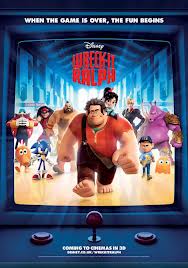
WRECK-IT RALPH


Computer games and its entertainment rival, the cinema, have never really got along. The more money-making games market has never had  the same success when one of its own has transferred across to the silver screen. Many still shudder at the thought of Super Mario Bros. and Street Fighter which led to the decline in the cross-over genre.

However, Disney have appeared to look into their back catalogue for inspiration and a way to avoid replicating the likes of Tomb Raider and have gone the Tron route - not a existing game but a make-believe one and going inside it!

And, for the most part, it works.

Here with Disney's latest animated offering, just like you would expect to find in a Pixar or an Aardman production, the attention to detail is off-the-charts. Any game-junkie will have a field day in spotting the many cleverly hidden in-jokes and references littered throughout Wreck-It Ralph. And, if you're an adult that grew up with arcade and console games then your nostalgia will well and truly be stoked as pretty much all the old classics get to make an appearance one way or another - Space Invaders, Frogger, Q*bert, Paperboy and Pac-Man all get their moment in the sun along with more recent fare such as Metal Gear Solid, World Of Warcraft and Portal. It even boils down to small-but-significant details such as: everything in Fit-It-Felix and Wreck-It Ralph's environment is all square and rectangular as his game is an old-and-dated 8 bit  model (check out the lamps etc) and everyone in it moves stiffly just like they did in the games of old. Even a "soldier" from the Halo-esque Hero's Duty reenacts the move that all people have done whilst playing a first person shooter - walking into a wall and unable to move away from it straight away.

Yes, attention to detail is paramount here but there does feel like a slight lack of this concentrated effort where the rest of the film is concerned. Pixar has always been able to blend humour for both the adults and their children in the audience, creating fun moments for all to enjoy and remember. Here, this balance is not necessarily evident, especially where the older folk are concerned. Yes there are moments for the adults - a clever rift of The Wizard Of Oz's castle guards ("oh we oh, Oreo") a Darth Vader breathing sound joke and Jane Lynch's wonderful "programmed with the most tragic back story ever"commando comment, but these are few and far between. Kids are, rightly or wrongly,are the ones mostly catered for with slapstick, toilet humour ("Why did the Hero flush the toilet? Because it was his Doodie!") and loud noises and bright colours.

Wreck-It Ralph is a great kids film but its not a classic family one. The people that will remember the multitude of in-jokes and 8 bit references that are littered throughout the first half of the film (mostly based around Game Central) may find their attention waning after Ralph game jumps into the likes of Hero's Duty and Sugar Rush which is where the children are then catered for with the figurative sugar rush of noise, colour and poop jokes. So, not a GAME OVER but you may think twice if the screen were to ask you to insert another coin TO CONTINUE....


UK release date: 08.02.13
Certificate: PG


Thursday, 31 January 2013

FLIGHT


A long time ago, there was a director who used to deliver a mixture of fun and thoughtful films. They, although very different, all had one thing in common - they were all live action.

Then Robert Zemeckis decided to champion the art of mo-cap and from 2000 all his films were centred around this technology - The Polar Express, Beowulf, A Christmas Carol. Now, he has come "Back From The Future" to revisit his old stomping ground of powerful stories aided by visual effects.

But this is no Forrest Gump or Castaway. Not by a long shot. Just like his one time mentor / collaborator Spielberg, Zemeckis appears to have grown up and moved into the realm of mature film making.

Here we have such ingredients as sex, drugs, alcohol, lies and loss of life. Plus a whole load of faith as well. And to bring this maturity to the screen he has seeked out the help of Mr Maturity himself, Denzel Washington. The actor who helped give creditability to such fare as Tony Scott's style-over-substance efforts, gets once again the chance to show why his name is synonymous with award nominations and winning - but without his usual Al Pacino-esque shouting that accompanied him in Training Day etc.

Washington has the unenviable task of playing a hated hero. His pilot is so much more than a flawed character. The implication seems to be that it's not that he managed to safely land the plane despite being drunk and drugged up, but that those intoxication's may have actually helped him to do so - keeping him high and alert helped him to do what 10 other pilots after the crash couldn't achieve in a simulator. Those pilots killed all the passengers and crew aboard their simulated planes whereas Washington's real life crash only loses 6 out of the 102 souls on board. Redeeming qualities are hard to come by for him. Just when you think he's going on the straight and narrow, the drink calls again and any feeling of sympathy for him from the viewer that has begun to build up, is then lost. This is eloquently shown in a scene nearing the films ending involving a minibar vodka bottle where Zemeckis leaves the camera, and the audience, static and waiting to observe the outcome.

With this being pretty much a Washington one man show, the co-stars, like the plane, get to take flight for a short while but then crash out of sight. Goodman is one of the few that leaves any impression on the audience and that is due to his larger-than-life drug supplier character who, with his two appearances, does a swift "pick me up" to both Washington's frazzled pilot and the viewers as well during the films running time. Cheadle as the lawyer who defends Washington somewhat begrudgingly - an alcoholic that never-the-less pulls off a miracle by saving almost all of the passengers and crew - feels like he had a much meatier role but maybe due to time constraints has found some of it lying on the cutting room floor.

Overall, a welcome return to non-mo cap from Zemeckis, Flight is a decent flawed hero film that does leave you guessing whether its central character will ever do the right thing, right up the official hearing finale.

UK release date: 01.02.13
Certificate: 15


Friday, 25 January 2013

ZERO DARK THIRTY


Think back to a time, not that long ago, when females were mainly allowed only in front of the camera, and not behind it. That began to change when Kathryn Bigelow started to deliver the likes of Point Break and Near Dark. Then, not only did she fully prove that a woman could direct, but that they could also encroach on territories normally associated only with men - action-based films - and that they could also win awards whilst doing so. Her The Hurt Locker put her up against her ex - James Cameron - at the Oscars, and she won.

Now Bigelow has returned to the genre that placed her firmly on the map and once again delves into the world of modern warfare. Except this time she's bringing abit more realism with her - more fact than fiction.

Not unlike TV's Homeland, here we have a strong female character with what appears to be a lifelong obsession that dominates her every waking and sleeping hour. On the small screen, Claire Danes' agent is driven by the feeling that she could have helped avert 9/11. Here upon the silver screen, Jessica Chastain is seeking closure on 9/11 by wanting to help close the book on the worlds largest, and what feels like as the events unfold, the longest manhunt ever.

Based on reports, accounts and documentation from relevant sources, here the story is not a simple search and destroy mission full of adventure. Instead, we have years of trawling loads of leads with most of them becoming dead ends. At times Chastain's characters frustration can be felt by the audience as information about similar sounding possible terrorists is presented again and again with what feels like little or no purpose or resolution. But then, what should we expect from a depiction of a true life manhunt that took thousands of days and millions of dollars to complete? Here, it's not a" trace a mobile phone call" and send in Jack Bauer once the relevant info has been uploaded to his PDA. Sources appear and disappear, clues are proven and disproven. Leads are followed and some too late - the London bombings being one of the attacks that is, as we know, not prevented.

Here, all is presented in a very straight forward fashion, almost to the style of a documentary. Many countries are visited but as they tumble across the screen, some begin to blur into others as the seemingly fruitlessness of the investigation begins to take hold. Then, after around two hours of this, Bigelow stops with the documentary and goes all Point Break action on the audience.

With stealth helicopters, night vision POV's, gunfire and expendable Bin Laden protectors, the last 40 minutes feels like a totally different film from what has gone before. She also, whilst ramping up the action and the tension, sneaks in a brave but ingenious factor of doubt as you watch these Marines perform their duty -  is it as honourable as it should have been? Some actions are questionable but is that acceptable in the circumstances? The question is not answered but presented for you the viewer to make up your mind about it.

Great but not as powerful as The Hurt Locker, Zero Dark Thirty is a worthy addition to the ever-expanding and most welcomed cannon of Kathryn Bigelow.

UK release date: 25.01.13
Certificate: 15